
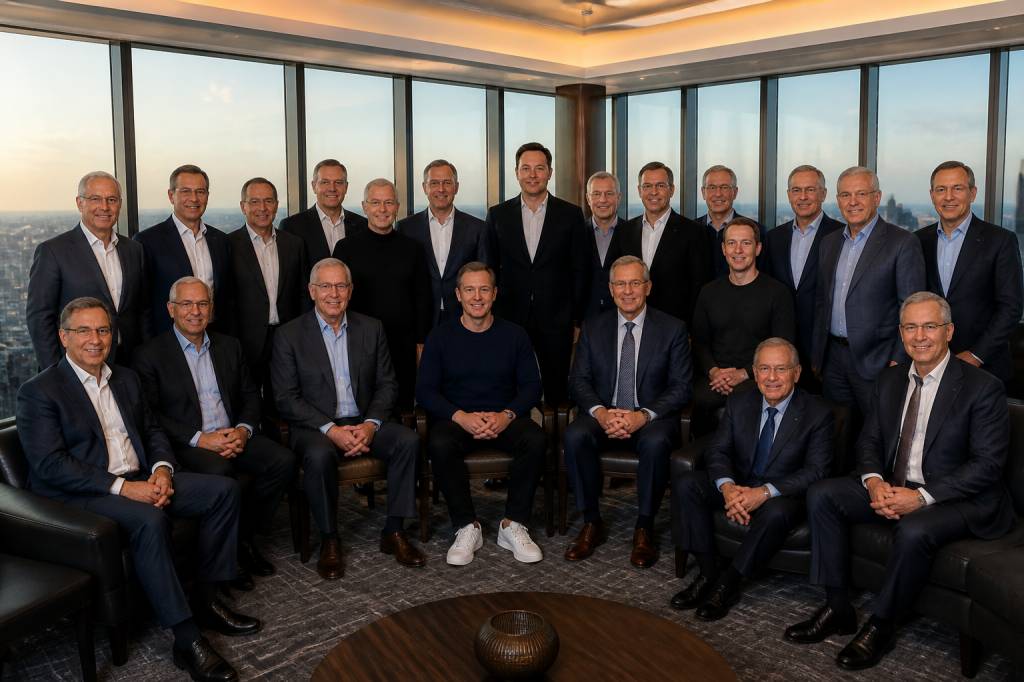
The world’s 500 richest people form an economic universe of their own. Their fortunes rise and fall with stock markets, private company valuations, commodity prices and, increasingly, the geopolitics of technology. Together, they control or influence businesses spanning artificial intelligence, luxury goods, finance, energy, retail, media and space exploration.
Yet a ranking of the 500 wealthiest individuals is more than a parade of impressive numbers. It is also a map of how global capitalism is changing. Wealth is concentrating in fewer hands, while the industries creating the largest fortunes are shifting rapidly. The industrial dynasties of the twentieth century remain influential, but technology entrepreneurs and investors now occupy a growing share of the top positions.
Any list must be read with caution. Net worth estimates change daily because much of this wealth is tied to publicly traded shares. A market rally can add billions on paper; a regulatory decision or a disappointing earnings report can remove them just as quickly. The exact order therefore varies between rankings published by Forbes, Bloomberg and other financial institutions.
A ranking shaped by stock markets
The 500 richest people in the world do not hold their fortunes in cash. Most of their wealth is linked to ownership stakes in companies, investment funds, real estate portfolios or family-controlled businesses. This distinction matters. When an entrepreneur is described as being worth $50 billion, that figure generally represents the estimated market value of their assets, not money sitting in a bank account.
Publicly listed companies make these fortunes easier to estimate. A founder’s shares in a technology group, for example, can be multiplied by the company’s current stock price. Private companies are more difficult to value. Analysts must rely on funding rounds, comparable businesses, debt levels and expectations about future growth.
This explains why rankings can move quickly. The value of a major technology company may change by several percentage points in a single trading session. For an individual holding a large stake, that movement can represent billions of dollars gained or lost without a single asset being sold.
-
Public equity: shares in listed companies remain the main source of wealth for many billionaires.
-
Private companies: start-ups and family businesses can generate enormous fortunes, but their valuations are less transparent.
-
Real estate and land: property holdings continue to support substantial fortunes, particularly in major global cities.
-
Investments: hedge funds, private equity, venture capital and diversified portfolios provide another route to the top 500.
The technology sector dominates the upper tier
Technology has become the most powerful wealth-creation engine of the modern era. Companies built around software, digital advertising, e-commerce, cloud computing and artificial intelligence can reach billions of users without the physical infrastructure traditionally required by manufacturers or retailers.
Some of the most prominent fortunes were created by founders who identified a structural change before it became obvious to the wider market. Online commerce transformed shopping. Search engines reorganised access to information. Smartphones turned the internet into a permanent layer of daily life. Cloud computing changed the economics of business technology.
Artificial intelligence is now producing a similar wave of expectations. Chip manufacturers, cloud providers and software companies have seen their valuations rise as businesses invest heavily in computing capacity and AI services. The beneficiaries include not only the founders of technology groups but also early investors, executives and families holding significant stakes.
The dynamic is powerful, but it is not risk-free. Technology fortunes depend on continued growth, high profit margins and investor confidence. A company that dominates one market can face rapid disruption from a new platform, a regulatory intervention or an open-source alternative. In this sector, yesterday’s advantage can become tomorrow’s vulnerability.
From luxury to energy: old industries remain powerful
It would be misleading to assume that the world’s wealthiest people are all technology entrepreneurs. Luxury goods remain one of the most effective industries for building multibillion-dollar fortunes. Global brands benefit from pricing power, customer loyalty and the ability to sell products whose symbolic value often exceeds their production cost.
Luxury groups also demonstrate the importance of family ownership. In several cases, wealthy families have preserved control over major fashion, jewellery, cosmetics and wine businesses across generations. Their success is based not only on brand recognition but on disciplined management, selective distribution and careful protection of scarcity.
Energy is another central source of wealth. Oil, natural gas, mining and electricity have created fortunes for entrepreneurs, investors and industrial families across several continents. The energy transition has not erased the financial importance of fossil fuels, but it is changing the strategic landscape. Renewable power, battery technology, critical minerals and grid infrastructure are attracting increasing amounts of capital.
Retail and consumer goods also continue to generate extraordinary wealth. Large-scale retailers benefit from purchasing power, logistics networks and customer data. In several markets, the ability to deliver products quickly and cheaply has become a competitive advantage comparable to owning prime real estate.
Who reaches the top 500?
The geography of extreme wealth is global, although it is not evenly distributed. The United States remains home to a large proportion of the world’s richest individuals, supported by deep capital markets, a strong technology ecosystem and a vast consumer economy. The country’s stock exchanges also make it easier for successful companies to raise capital and reward founders with valuable equity.
Europe remains strongly represented through luxury, industry, finance, pharmaceuticals and consumer brands. The region may produce fewer technology giants than the United States, but its established companies often possess powerful international franchises.
Asia has created some of the world’s largest fortunes through manufacturing, real estate, technology, retail and infrastructure. China, India, Japan, South Korea and other Asian economies have produced entrepreneurs whose businesses serve enormous domestic markets before expanding internationally.
The list also includes fortunes connected to the Middle East, Latin America, Africa and Eastern Europe. These may be built through energy, commodities, telecommunications, banking, construction or diversified family conglomerates. The common factor is not a single industry but access to capital, political stability, scalable assets and a market capable of supporting sustained growth.
Inherited wealth versus entrepreneurial fortunes
One of the most persistent debates concerns the difference between inherited and self-made wealth. The distinction is not always straightforward. A founder may build a company from scratch, but benefit from family capital, elite education or an existing business network. An heir may inherit ownership but later expand the company significantly.
Family wealth often survives because it is organised through holding companies, trusts and long-term investment structures. These mechanisms allow relatives to retain voting control while distributing economic benefits across generations. They also protect assets from short-term pressure and make it possible to invest in sectors with long time horizons.
Entrepreneurial fortunes, by contrast, are usually more concentrated. A founder may own a large stake in a single company, making their wealth particularly sensitive to market movements. This concentration can create spectacular growth, but it also increases exposure to operational risk.
The practical lesson for business leaders is clear: creating wealth and preserving wealth require different skills. Innovation may produce the initial fortune; governance, diversification and succession planning determine whether it lasts.
How the richest people influence the global economy
The influence of the top 500 extends well beyond their personal balance sheets. Through their companies, investment decisions and philanthropic organisations, they can shape employment, research, public debate and even national policy priorities.
A billionaire who controls a major technology company may influence the development of artificial intelligence, data privacy and digital communication. An industrial investor can affect the future of energy or transport. A media owner may shape the political conversation. A philanthropist can direct billions toward climate research, public health or education.
This influence is amplified by ownership structures. A relatively small voting stake can provide significant control when other shareholders are fragmented. Dual-class share structures, common in technology companies, may allow founders to retain decision-making power even after selling part of their economic interest.
The result is a new form of private power. Governments remain responsible for public policy, but the decisions of a few corporate leaders can affect supply chains, labour markets and technological standards across borders. When a major platform changes its algorithms or a chip manufacturer expands production, the consequences can be felt by millions of businesses.
Philanthropy and the question of responsibility
Many members of the global wealth elite dedicate substantial sums to philanthropy. Donations support universities, hospitals, scientific research, disaster relief and social programmes. Some billionaires have signed pledges to give away much of their wealth during their lifetime or after their death.
Philanthropy can move quickly where public institutions are slow. Private funding has helped accelerate vaccine research, fund climate initiatives and expand access to education. It can also support experimental projects that governments or traditional investors consider too risky.
But philanthropy raises difficult questions. Should private individuals have such a large role in deciding which social problems deserve attention? Can a charitable donation compensate for poor working conditions, aggressive tax planning or environmental damage linked to a company? And who evaluates the results?
These questions are not merely philosophical. They concern accountability. A public budget is debated, audited and subject to political oversight. Private giving often operates with far less transparency. The effectiveness of philanthropy therefore depends on measurable objectives, independent evaluation and a willingness to acknowledge failure.
The tax debate and the limits of wealth rankings
Extreme wealth has intensified discussions about taxation. Since much of a billionaire’s fortune is held in shares, the individual may report relatively modest taxable income compared with the value of their assets. Selling shares can create capital gains, but borrowing against those assets may provide liquidity without an immediate sale.
Governments are examining different responses, including higher capital-gains taxes, minimum taxes on very wealthy individuals, inheritance-tax reforms and greater international cooperation. Supporters argue that the richest citizens should contribute more to the infrastructure and institutions that made their success possible. Critics warn that poorly designed measures could encourage capital flight, reduce investment or damage entrepreneurship.
The debate is complicated by the limitations of wealth rankings. Estimates rarely capture every liability, private asset or legal structure. They also do not measure social contribution, business quality or the number of jobs created. A ranking can show who owns the most valuable assets, but it cannot determine who has created the greatest long-term value.
What the next generation of fortunes may look like
The composition of the top 500 is likely to evolve as new technologies mature. Artificial intelligence, robotics, biotechnology, cybersecurity, space infrastructure and clean energy are obvious candidates for future wealth creation. The winners will not necessarily be the companies with the most impressive demonstrations, but those able to convert innovation into reliable revenue and durable competitive advantages.
Climate adaptation may also become a major business opportunity. Water management, resilient construction, low-carbon materials, energy storage and agricultural technology are moving from specialist markets into the centre of economic planning.
At the same time, the next wave of wealth may emerge from countries that are currently underrepresented. Digital payments, mobile commerce and affordable connectivity are creating opportunities in fast-growing markets. Entrepreneurs who understand local needs can sometimes outperform global incumbents because they design products for realities that established companies overlook.
The real significance of the 500 richest people is therefore not the ranking itself. It is what the ranking reveals about the economy: where capital is flowing, which technologies investors trust, how ownership is organised and who has the power to influence the future. The list may change from one week to the next, but its underlying message remains remarkably stable: wealth follows scale, scarce assets, strong networks and the ability to turn structural change into a business advantage.