


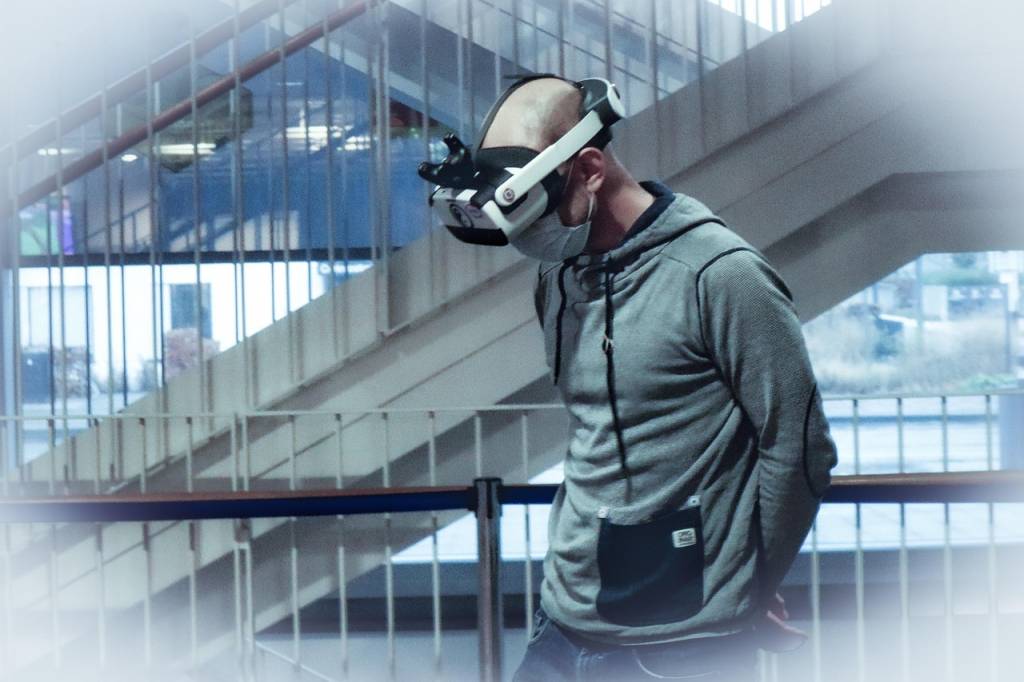
Reimagining Collaboration in the Age of Virtual Reality
As global industries continue to embrace digital transformation, virtual reality (VR) is no longer confined to the entertainment sector. It has emerged as a transformative force in the industrial world—particularly in remote collaboration between engineering teams, design stakeholders, and manufacturing experts. The challenges of physically dispersed teams, growing product complexity, and shortened market windows demand a new approach to how professionals co-design, validate, and iterate on products. Enter virtual reality software: the bridge between 3D CAD data and real-time immersive collaboration.
At the forefront of this technological leap is Skyreal VR, an advanced VR CAD software developed specifically for industrial sectors such as aerospace, defense, maritime, and energy. Skyreal VR empowers engineering teams to break free from the constraints of traditional design workflows and collaborate within detailed, life-size digital prototypes—remotely and in real-time.
The Limitations of Traditional Collaboration Tools in Engineering
Before exploring the immense potential of virtual reality, it is important to recognize the limitations plaguing existing engineering collaboration methods. Standard 2D screens and non-immersive environments force engineers to work in isolation or exchange iterative feedback through delayed processes such as emails, shared screenshots, or static video calls. Critical shortcomings include:
- Lack of Spatial Context: Project stakeholders rely on interpreting complex geometries through 2D projections, which hinders understanding of spatial relationships and ergonomic concerns.
- Asynchronous decision-making: Design reviews often happen sequentially, creating bottlenecks and slowing down workflows.
- Communication Gaps: Misinterpretations often arise due to a lack of shared visual and interactive contexts, particularly between design, manufacturing, and operations teams.
These pain points are exacerbated when teams operate across different geographies and time zones. The result is slower product development, increased prototyping costs, and an elevated risk of design errors surfacing late in the lifecycle.
Virtual Reality Software: Bridging Distance and Design
Skyreal VR addresses these challenges head-on by introducing immersive, interactive collaboration environments that allow teams to work synchronously regardless of location. Built on Unreal Engine 5, Skyreal VR supports industrial-scale model visualization with photorealistic accuracy. This transforms conventional CAD models into rich virtual environments where stakeholders can explore assemblies, propose changes, and simulate operations at full scale.
Unlike traditional 3D viewers or conferencing tools, VR immerses users in the geometry, making it possible to walk around, interact with, and even manipulate components as if they were physically present. This radically enhances comprehension, shortens feedback cycles, and improves team consensus on critical design decisions.
Technical Depth Built for Industrial Engineering
Skyreal VR is more than a visualization tool—it is a production-grade virtual reality software solution capable of handling the complexity of full-scale engineering projects. Its foundation on Unreal Engine 5 allows the platform to process millions of geometric primitives with fluidity and detail. Features like Temporal Super-Resolution Anti-Aliasing (TSAA), dynamic shadow mapping, and ambient occlusion further ensure a truly immersive experience without compromising performance.
Moreover, Skyreal’s proprietary CAD-to-VR pipeline maintains parametric fidelity, assembly hierarchies, and constraints from original CAD files. This ensures that what users see and interact with in VR is not just a visual mock-up, but a fully representative digital twin—accurate, configurable, and traceable to the source engineering data.
Remote Collaboration Scenarios Unlocked by VR
By adopting VR CAD software, organizations unlock new operational paradigms that go far beyond traditional video conferencing or screen-sharing techniques. Here’s how Skyreal VR is transforming collaboration in high-stakes industries:
Simultaneous Multi-Stakeholder Design Reviews
With Skyreal VR, geographically dispersed teams can now meet within the same virtual prototype environment. Engineers in Toulouse, project managers in Hamburg, and production planners in Singapore can simultaneously explore a CAD model together—inspecting components, measuring tolerances, and annotating changes in real time. This synchronous interaction streamlines communication and allows issues to be identified and addressed far earlier in program lifecycles.
Collaborative Process Validation and Assembly Sequencing
Remote collaboration in VR isn’t limited to design. Skyreal VR’s integration with real-time physics engines allows engineering and manufacturing teams to simulate contact forces, validate assembly sequences, and conduct ergonomics studies within an immersive environment. This is critical for evaluating manufacturability prior to physical prototype investment, ensuring tool accessibility, and reducing human-factor risks on the shop floor.
Remote Training and Onboarding
Training operators or field technicians on new equipment previously required travel, physical prototypes, or high-fidelity mock-ups—expensive and time-intensive ventures. VR breaks these dependencies. With Skyreal VR, training modules can be developed directly from CAD models, enabling new personnel to explore machines in full scale, practice procedures, and develop operational familiarity—all from a headset and internet connection.
Real-Time Feedback Integration
Integrated control APIs allow VR sessions to be orchestrated from central systems, enabling structured data collection, in-session adjustments, and user behavior analysis. This interactivity fosters an agile product development approach, where stakeholders validate and iterate in a collaborative loop rather than sequential silos.
Industry Applications and Measurable Advantages
Skyreal VR adds strategic value across multiple layers of enterprise engineering—from R&D to operations. The platform's benefits are not theoretical; they are backed by measurable gains:
- Design Engineering: Accelerates validation cycles by up to 30% and enables richer architectural explorations.
- Digital Manufacturing: Facilitates process validation, ergonomic analysis, and fixture design in VR before committing to physical tooling.
- Operational Readiness: Supports immersive training, predictive maintenance planning through Digital Twin integration, and real-time remote support.
Each application domain benefits not just from the visual fidelity of VR, but from the real-time collaborative nature of the environment. Insights surface faster. Delays are minimized. Costs associated with late-stage changes and travel are significantly reduced.
Enterprise Integration and Scalability
Deploying VR collaboration at enterprise scale requires flexibility, interoperability, and support. Skyreal VR delivers on all fronts. The Remote Control framework uses RESTful APIs to connect with existing PLM and ERP systems, while the XDE module brings physics simulation into the virtual workspace. Skyreal’s deployment model includes full technical consulting to ensure infrastructure alignment, software integration, and data security compliance—key concerns for mission-critical industries.
The result is a smooth transition from traditional engineering workflows into a new, immersive era—where collaboration happens in real-time, in full scale, and directly within the product environment.
Future Outlook: A Collaborative Revolution in Real-Time
The pressures faced by industrial engineering teams demand speed, accuracy, and decentralization. Skyreal VR provides the substrate for a new generation of engineering collaboration rooted in presence, interaction, and immersion. As remote work becomes the norm and engineering programs span countries and continents, the ability to bring stakeholders “into the product” regardless of location is no longer a luxury—it is a necessity.
Whether you are designing the next-generation aircraft, validating assembly lines in wind turbine production, or training technicians for offshore deployment, immersive VR collaboration enables higher confidence in every decision made—faster and with fewer physical resources than ever before.
With platforms like Skyreal VR, virtual reality is no longer a visionary concept—it's a strategic advantage reshaping how we invent, build, and support the world’s most complex innovations.