


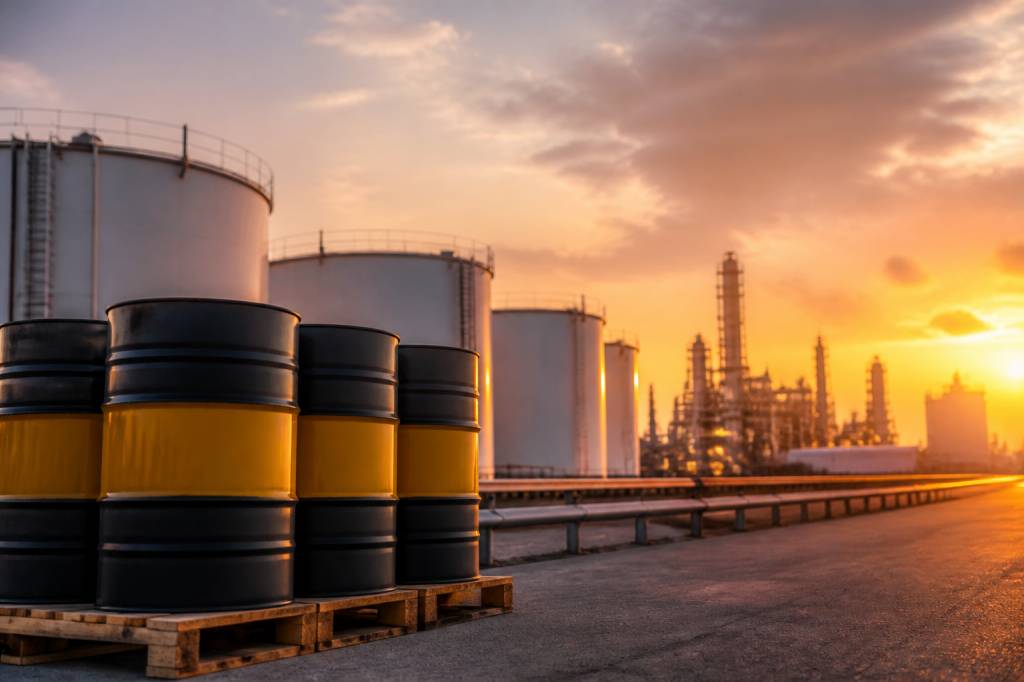
A crude oil price of one dollar per barrel would not be an ordinary market movement. It would be a financial shock of historic proportions, capable of reshaping energy markets, public budgets, corporate strategies and geopolitical relationships within months.
For comparison, the global oil market has spent most of the past decade operating at prices several dozen times higher. Even during severe downturns, crude has rarely approached the symbolic threshold of one dollar per barrel. Such a price would therefore signal more than cheap fuel. It would suggest a collapse in demand, an extreme oversupply, a breakdown in market coordination, or a combination of all three.
What would it mean for businesses and global markets? The answer is more complicated than “lower oil prices are good for consumers”. Some companies would benefit immediately. Others would face an existential crisis. Governments, meanwhile, would need to manage an economic transition as disruptive as a sudden price spike—only in the opposite direction.
What does one dollar per barrel actually mean?
The price of a barrel is usually quoted for a benchmark crude such as West Texas Intermediate, or WTI, and Brent crude. These benchmarks do not represent every type of oil traded around the world. Crude differs in quality, density, sulphur content and location, which means that prices can vary significantly between grades.
A price of one dollar per barrel would therefore not necessarily mean that every barrel of oil sold globally costs exactly one dollar. Some producers could receive more, while others might be forced to sell at a discount. Transport costs, refining margins, taxes and storage expenses would continue to exist.
There is also a crucial distinction between the headline price and the price delivered to a customer. A refinery does not buy crude and immediately sell it as petrol. The oil must be transported, processed and distributed. Retail prices would fall sharply, but they would not reach one dollar per barrel converted directly into a fuel-pump price.
Still, the economic signal would be unmistakable: the market would be pricing crude as if supply were abundant and the immediate value of additional production were close to zero.
Why could oil fall to such an extreme level?
Several scenarios could produce a price near one dollar per barrel. The most obvious would be a dramatic collapse in global demand. A deep worldwide recession, a prolonged industrial shutdown or a major technological transition away from combustion engines could leave producers with far more oil than consumers need.
Oil cannot simply be stored indefinitely without cost. Tankers, terminals, pipelines and underground facilities all have limited capacity. When storage fills up, producers may be forced to sell at almost any price—or even pay buyers to take delivery.
This mechanism has appeared before. In April 2020, the price of certain WTI futures contracts briefly fell below zero because traders holding contracts for physical delivery had nowhere to put the oil. The event was exceptional, but it demonstrated an important principle: in an oversupplied market, the physical logistics of storage can become more important than the underlying value of the commodity.
A one-dollar price could also result from a severe supply shock in reverse. Imagine several major producing regions increasing output at the same time, while a breakdown in cooperation among oil-exporting countries prevents coordinated production cuts. If demand were weak, the market could quickly become saturated.
Other factors might include:
- A rapid global shift toward electric vehicles and renewable energy.
- A major recession affecting transport, manufacturing and construction.
- Technological breakthroughs that reduce oil consumption across several industries.
- Trade restrictions that trap crude in producing regions.
- Political instability that disrupts exports while leaving local production intact.
In practice, a price this low would probably reflect not one cause but a chain reaction. Oil markets are global, highly leveraged and sensitive to expectations. Once traders begin to anticipate falling demand, investment may be delayed, inventories may rise and producers may compete aggressively for shrinking outlets.
The immediate winners: households and oil-consuming industries
The first beneficiaries would be households. Lower petrol and heating costs would increase disposable income, particularly for people who rely heavily on private cars or live in regions with oil-based heating systems. For many families, the effect would resemble a tax cut.
Transport companies would also see their operating expenses fall. Airlines, shipping companies, trucking firms and delivery businesses all spend heavily on fuel. A sharp reduction in oil prices could improve margins, strengthen balance sheets and create room for lower prices.
Manufacturers could benefit as well. Oil is not only used for transport; it is also a feedstock for plastics, chemicals, synthetic fibres, packaging and industrial materials. Lower input costs would support companies in sectors ranging from construction to consumer goods.
Retailers might see stronger consumer demand. When people spend less at the petrol station, they may have more money available for restaurants, travel, entertainment or durable goods. This is the classic “consumer windfall” associated with falling energy prices.
However, the benefit would depend on the cause of the price collapse. If oil fell to one dollar because the global economy had entered a severe depression, consumers might save the money rather than spend it. Cheap fuel cannot fully offset unemployment, falling wages or financial insecurity.
Oil producers would face an unprecedented squeeze
For producing companies, one dollar per barrel would be devastating. Most oil projects require prices considerably above that level to cover exploration, drilling, labour, equipment, transport and regulatory costs. Even low-cost producers would struggle to generate positive cash flow.
The first response would be a wave of production cuts and capital expenditure reductions. Companies would cancel exploration projects, delay maintenance and shut down high-cost wells. Some fields cannot be stopped easily without risking long-term damage, but production would still decline as investment disappeared.
Highly indebted producers would be particularly vulnerable. Oil companies often borrow heavily to finance drilling programmes, expecting future output to repay the debt. At one dollar per barrel, those assumptions would collapse. Defaults, restructurings and bankruptcies would spread through the sector.
The impact would not be limited to oil majors. Thousands of suppliers depend on exploration and production activity. Drilling contractors, engineering firms, geological consultancies, equipment manufacturers, maritime companies and local service providers would all feel the shock.
In regions where oil dominates employment and public revenue, the social consequences could be severe. Energy-producing communities might experience falling wages, property prices and tax receipts at the same time. A low oil price can be good for consumers nationally while being economically brutal for producing regions.
Government budgets would come under pressure
Many oil-exporting countries depend on hydrocarbon revenues to finance public services, salaries, subsidies and infrastructure. A price of one dollar would leave a large hole in national budgets.
Governments could respond by drawing on sovereign wealth funds, borrowing internationally, cutting spending or raising taxes. Some currencies would come under significant pressure, especially where exports are concentrated in crude oil. Import costs would rise as the currency weakened, reducing part of the benefit from cheap energy.
Countries with strong financial reserves might be able to absorb the shock for several years. Others would face difficult choices almost immediately. Public investment could be postponed, subsidies reduced and social programmes reviewed. Political tensions would likely intensify.
Oil-importing countries would find themselves in a more comfortable position. Their trade balances would improve because they would pay less for energy imports. Inflation would fall, central banks could maintain lower interest rates and governments might redirect spending toward infrastructure or household support.
Yet the global financial system is interconnected. A fiscal crisis in a major oil-producing country can affect banks, sovereign bonds, currencies and international investors. The benefit of cheaper imports would therefore coexist with new financial risks.
Inflation would fall—but central banks would still have work to do
Energy prices have a powerful influence on inflation. When oil falls sharply, transport costs decline, production becomes cheaper and households face lower utility bills. Headline inflation could drop quickly, potentially moving into negative territory.
This would give central banks more room to cut interest rates or maintain accommodative monetary policy. Businesses would benefit from lower borrowing costs, and governments could find it easier to finance fiscal measures.
But cheaper oil does not automatically create economic stability. Deflation can become a problem when falling prices encourage consumers and companies to delay purchases. If the oil collapse reflected weak demand, central banks would need to distinguish between helpful disinflation and a broader contraction.
There is another complication: energy companies and producing countries are significant borrowers. If their revenues collapse, defaults could transmit stress through banks and credit markets. A lower inflation rate may look positive on paper while financial conditions deteriorate beneath the surface.
Stock markets would split into winners and losers
Equity markets would not react uniformly. Airlines, logistics firms, chemical producers and some consumer businesses could see their earnings expectations improve. Investors might rotate toward companies with high energy exposure on the cost side but limited exposure on the revenue side.
Oil and gas producers, oilfield service companies and pipeline operators would face intense selling pressure. Their assets could be revalued downward, particularly if investors concluded that the price collapse was structural rather than temporary.
Banks could also be affected. Financial institutions with large loans to energy companies or producing regions would face higher credit losses. Pension funds and investment funds exposed to energy equities, corporate bonds or infrastructure projects could suffer significant losses.
The most important question for investors would be duration. Is the one-dollar price a short-lived dislocation caused by storage constraints, or does it reflect a permanent transformation in demand? A temporary shock might create opportunities for strong companies with healthy balance sheets. A structural collapse would require a complete reassessment of the energy sector.
Businesses would need to rethink strategy, not simply celebrate
For companies outside the energy industry, cheap oil would create an opportunity to protect margins. Management teams could lock in lower fuel prices, renegotiate transport contracts and review supply-chain costs.
But prudent executives would avoid assuming that one-dollar oil is permanent. Commodity markets are cyclical, and extreme prices often trigger the conditions for their own reversal. Low prices reduce investment, weaken future supply and eventually create upward pressure when demand recovers.
Businesses should therefore consider several practical responses:
- Separate short-term cost savings from long-term strategic assumptions.
- Review exposure to oil-producing customers, suppliers and lenders.
- Stress-test budgets against both prolonged low prices and a rapid rebound.
- Use part of the windfall to strengthen liquidity rather than simply increase spending.
- Continue assessing energy efficiency and diversification plans.
For transport companies, the temptation would be to expand capacity aggressively. That could be risky. If one-dollar oil coincided with a global recession, demand for flights, freight and deliveries might remain weak despite lower fuel costs.
For manufacturers, the better strategy might be to use lower input costs to invest in productivity, digital systems and supply-chain resilience. Cheap oil offers breathing space; it does not eliminate competition.
The energy transition would become more complicated
At first glance, one-dollar oil appears to be bad news for electric vehicles, public transport and renewable energy. If petrol becomes exceptionally cheap, consumers may have less financial motivation to switch technologies.
However, the effect would depend on public policy and investor confidence. A price collapse could make clean-energy projects harder to finance if returns are compared directly with fossil-fuel alternatives. Governments might need to strengthen incentives, carbon pricing or regulation to maintain the pace of decarbonisation.
At the same time, a crisis in the oil industry could accelerate the transition by destroying investment confidence. Companies and lenders may decide that high-cost fossil-fuel assets are too risky, particularly if demand is declining structurally. Capital could move faster toward electricity networks, storage, efficiency and alternative fuels.
Cheap oil would also expose the political tension at the heart of the energy transition. Consumers welcome lower prices, while policymakers want to reduce emissions. The challenge would be to avoid allowing a temporary market shock to dictate long-term climate strategy.
Geopolitics would be reshaped by the price shock
Oil has always been more than a commodity. It is a source of state power, diplomatic influence and strategic leverage. A price of one dollar would weaken exporters and reduce the financial resources available to project influence abroad.
Some producers might attempt to compensate by increasing output, hoping to defend market share. That response could push prices even lower, creating a destructive cycle. Others might seek closer political and economic partnerships with major importers.
Importing countries would gain leverage, but they would not be entirely insulated. Disruptions to production, shipping routes or refining capacity could still cause regional shortages. A low global benchmark does not guarantee that every market has immediate access to affordable fuel.
Energy security would remain important. Businesses and governments might discover that resilience has a value independent of price. A company that depends on a single supplier or transport route can still be vulnerable, even when the commodity itself is cheap.
A rare price, with consequences far beyond the petrol station
One-dollar oil would deliver an immediate benefit to energy consumers, but it would also signal an economic rupture. Households, airlines and manufacturers could enjoy lower costs, while producers, banks and exporting governments faced severe losses.
The central lesson for businesses is simple: price alone does not tell the whole story. The reason behind the price matters more than the number printed on a market screen. If crude reached one dollar because supply temporarily overwhelmed storage, the shock could reverse quickly. If it reflected a permanent collapse in demand, companies would need to rethink their business models from the ground up.
For executives and investors, the sensible response would be neither panic nor celebration. It would be scenario planning, balance-sheet discipline and a clear distinction between a short-term windfall and a lasting change in the global economy. In energy markets, the cheapest barrel is rarely just cheap. It is usually telling the world that something much bigger is moving beneath the surface.